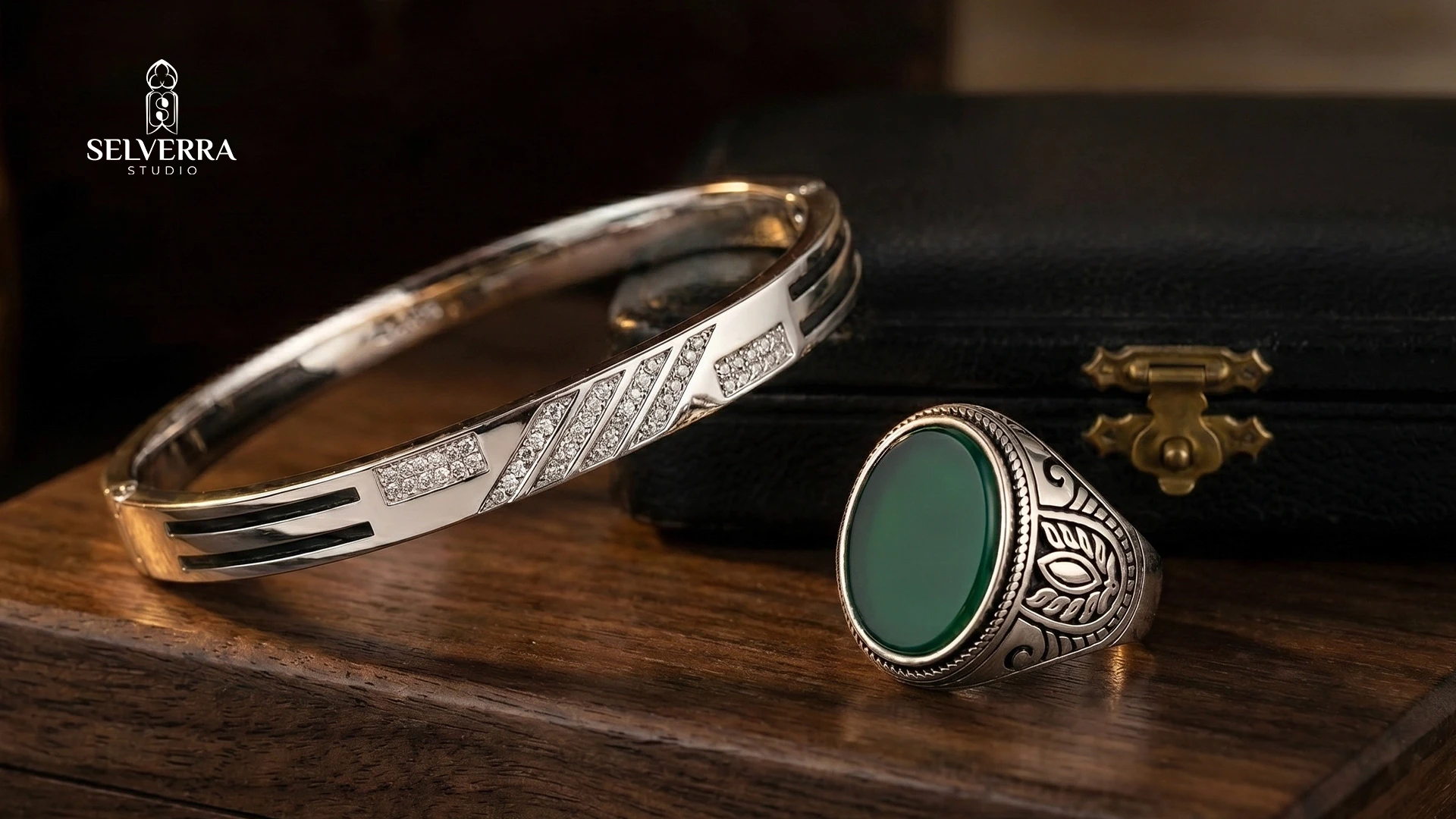
What Is 925 Silver Jewellery? Meaning, Quality and Buying Guide

925 silver jewellery, also known as sterling silver, is one of the most popular choices for elegant and durable accessories. In this guide, discover what 925 silver means, how to verify its authenticity, its benefits, and key factors to consider before buying silver jewellery.
The Mark That Separates a Keepsake from a Commodity
You likely didn’t realize that you have previously owned something this precious. A set of earrings that your mum stopped wearing but never got rid of; a thin silver chain sitting in a back drawer which is somewhat tarnished but still valuable; and an old ring that came off your grandmother’s finger and eventually came into contact with yours. You had examined the ring when you first saw it.
Not a price. Not a date. Just three digits, quietly declaring something most of us were never taught to read. 92.5 silver.
For the uninitiated, it looks like fine print. For anyone who has spent time around silver, real silver, the kind that survives decades rather than seasons, it reads like a signature. A declaration of intent from the craftsman who originally created this item to the future owner/recipient.
A stamp on a piece of silver can explain much of its past. The history of 925 sterling silver is actually quite old and has a lot more complexity than most people will understand.
Understanding What 925 Means And Why It Is Important.
Not only is pure silver beautiful, but it is also soft. Without the support of adjacent materials, pure silver will easily scratch or mar, so it doesn't hold its shape very well compared to other types of metal. This has been understood for hundreds of years by silversmiths, who made it their mission to find a partner for silver that would allow it to reach its full potential. The solution was to create an alloy of silver - 92.5% silver mixed with 7.5% copper or some other metal that strengthens the bond between the silver and its companion metal.
When you see the phrase "925" stamped on sterling silver, it does not just signify quality, but is also a guarantee of heritage back from England in the 1200s, when it became an official standard for both the manufacturer/creator and for someone who received it. This tiny, uncomplicated jewellery hallmark 925 is a clear indication that there has been a very long history of tradition in the making of handmade silver items.
Difference Between 925 Silver and Pure Silver
There are quite a few different factors that differentiate 925 silver jewellery from 999% pure silver. Since pure silver is very soft, jewelers are barely creating very intricate designs out of it; That means, 925 silver jewellery is relatively better suited for daily/long-time wearing.
In fact, sterling silver is just silver that is made suitable for wearing. Incorporating a tiny quantity of copper does not change its nature but rather enhances it. The shine stays. The mass remains true. The personality is the same. What is achieved is sturdiness: the capacity to be designed in a 925 silver ring that preserves its shape even after many years of wearing, or a 925 silver necklace that still recalls its tale without losing its form.
Recognising It: With and Without a Loupe
With so many precious metals like silver, there are many ways that you can learn what is real versus what is not, and that's actually a very good thing. To help you distinguish 925 sterling jewellery with true 925 sterling antique jewellery, you will need to pay particular attention to an antique item's hallmark, which is almost always located on either the inside band of the ring or on the rear of the clasp of a 925 silver bracelet or or the backing of 925 silver earrings. Finally, some old British sterling jewellery will also carry a 'lion passant' stamp.
Beyond hallmarks, sterling silver develops a distinctive warmth when held. It conducts cold naturally. A true 925 silver chain, would in fact, be felt as a cool piece against skin right out of the box, this is the only little tangible proof of the fact for which plated metals are not able to produce the same effect.
Daily Wear, Tarnish, and the Mythology of Blackening
A reasonable concern, and one worth addressing honestly: does 925 silver turn black? The short answer is that it can tarnish, a natural reaction between the copper in the alloy and sulfur compounds in the air, on skin, or in certain products. This is not deterioration. It is the silver responding to its environment, expressing a kind of quiet vitality.
A 925 silver payal worn daily through an Indian summer will tarnish differently than one kept in a velvet box. Neither is more or less authentic. The piece that is worn is alive; the one stored is resting. Both deserve care. A gentle polish with a soft cloth, occasional cleaning with mild soap and warm water, and storage away from humidity are all that sterling silver asks in return for a lifetime of companionship.
For daily wear, including 925 silver anklets, earrings, and rings, the alloy is entirely suited, provided basic care is observed.
What to Look For When You Are Ready to Choose
Not all silver 925 jewellery online is created with the same intention. A distinction exists between silver just stamped and silver produced. The weight of the item, the finish on its edges, the way a clasp moves, are the details that set apart a well-thought-out object from a mere commodity.
A 925 silver ring picked carefully and worn consciously turns into a completely different thing with time. It starts to accumulate the little signs of a life: a hardly visible scratch from a fence, a patina that even polishing can't quite eliminate. These are not flaws. It's the piece of jewellery that is starting to tell a tale.
Continue Reading
Explore more stories from our journal